See the latest Newsletter Here!!
(Opens in a new window)
Become a member today... For a Freelancer join here, for an Organisation join here! :)
See our 'Features' and 'Interviews' pages for stories from around the wildlife, natural history, conservation, environmental and Vegan film-making world! GotKit to sell? Add your items here! (NB. Members post for free!) Looking for work or got something to offer... Visit our Jobs Page.
Open Your Eyes ... Watch: GREENWASHED
Greenwashed
is a documentary film and series released in late 2025, co-hosted by British naturalist and broadcaster Chris Packham and Mexican physician and filmmaker Dr. Sofia Pineda Ochoa.
The documentary aims to expose what the creators call "uncomfortable truths" that many mainstream environmental organizations often ignore. It challenges prevailing narratives about sustainability and highlights how misinformation or "false solutions" can actually hinder real progress in addressing the climate and ecological crisis.
The film explores the hypocrisy within certain environmental movements and investigates how corporate "greenwashing"—the practice of using misleading environmental claims for marketing—stalls authentic action.
The film has been released as a full-length documentary (nearly 3 hours long) and as a three-part series (broadcast on various TV networks).
Packham describes the film as an "urgent call to action" intended to spark honest conversations about the survival of humans and wildlife.
Featuring BBC-presenter and fearless activist, Chris Packham, and created by Mexican physician and environmentalist Sofia Pineda Ochoa, this film confronts existential ecological crises threatening our planet through the lens of a major yet uncomfortable truth — one that most environmental organizations refuse to acknowledge or, worse, actively deny.
The film exposes the threat this silence poses for both humans and animals worldwide. We know how to solve our problems and change the world. But the question remains, will we?
HELL IS HERE: What Greenwashed Reveals About the Truth We’re Not Allowed to Say by Jonathan Ratner
Why the most taboo words in environmentalism are “overpopulation” and “less.”
What Thomas Robert Malthus got wrong in 1798 was that he underestimated two things 1) the discovery and utilization of vast sources of energy that has allowed us to work around the limitations humans faced prior to the industrial revolution 2) the development and implementation of the scientific method which allowed us to get beyond the childish, immature and ineffective belief in a god and fairy tales to solve our problems.
Joe Galuszka The Quiet Was Loud – OUT NOW!
For Joe Galuszka
December 2025
Bristol-based composer, conductor, and instrumentalist Joe Galuszka made a striking debut with his upcoming EP ‘Fractures’, beginning with the release of its lead single, ‘The Quiet Was Loud’.
Mixed by Alex Garden (Tarren) and mastered by Nick Cooke (Britannia, Temple), the EP explores themes of grief, resilience, and emotional transformation, with tracks to be released incrementally throughout the project.
Galuszka’s journey in music began in Buckinghamshire, where he taught himself piano before studying trumpet, horn, and tuba. He holds a BMus in Music from Canterbury Christ Church University and an MA in Composition for Film and Television from the University of Bristol. Over the years, Joe has composed for orchestras and brass bands, scored over 15 films and documentaries, and won Gold at the London Independent Film Awards for his debut wildlife documentary soundtrack, Firekeepers of Kakadu. He was also recently nominated for Best Original Score in a Short at the International Sound and Film Music Festival for A Sin de Fella Story.
‘The Quiet Was Loud’ is a deeply evocative piece of neoclassical music, leaning into ambient, moody textures with a wintry, almost Christmassy feel. Joe originally wrote the track on a train ride home to see his father for the first Christmas in 12 years, a journey that shaped the emotional core of the piece. Over the years, the composition expanded from a digital arrangement in Logic to a fully orchestrated work featuring Joe on piano, bells, and glockenspiel, alongside Bristol Ensemble string players.
The single evokes the atmospheres of contemporary composers like Ólafur Arnalds, Max Richter, and Ludovico Einaudi, while carrying a quiet, alluring confidence that is uniquely Joe Galuszka. As Joe explains:
"The whole album, 'Fractures', but also this track, is a deeply personal musical journey. For me, music is not just about the sound — it’s the weight of what we feel, but never say. Each track serves as a sonic reflection of moments of loss and that subsequent healing process."
With ‘The Quiet Was Loud’ and the forthcoming EP ‘Fractures’, Joe Galuszka announces himself as a compelling new voice in ambient classical music, one that is contemporary, emotional, and deeply resonant.
‘The Quiet Was Loud’ EP by Joe Galuszka was released on December 5th, 2025.
An award-winning documentary following bison ranger Donovan Wright as he journeys to Poland’s ancient Bialowieza Forest, uncovering how Europe’s gentle giants are transforming entire ecosystems.
Bringing these insights home, Don returns to the UK with a renewed understanding of what it truly means to live alongside wildlife, furthering his work to restore nature and reconnect the next generation through his work with Wildwood Trust.
The live YouTube premiere of the full film happened on January 15th. Watch:
CALL FOR ENTRIES: Wildscreen Panda Awards
& Official Selection 2026
Enter your film into the Wildscreen Panda Awards and Official Selection
We announce that submissions for the 2026 Panda Awards and Official Selection are now open.
Early bird deadline is 24th February 2026, so what are you waiting for - get those submissions in!
Panda Awards
The 2026 Panda Awards competition comprises of 18 categories and 3 special awards including the Golden Panda, Outstanding Achievement Award and Field Craft Recognition.
Brand new for 2026, we’re excited to introduce the brand-new Digital-First Panda Award category, recognising the importance of digital-first storytelling in diversifying the stories of nature being told, the storytellers and the audiences being reached.
You can submit your film for the Panda Awards exclusively via FilmFreeway
Official Selection
The Official Selection is separate from the Panda Awards, and showcases creative and bold stories that spark positive and restorative action for our natural world, acting as a global launchpad for new and diverse voices.
Our Official Selection is split into two categories: short films, where we accept any film under 20 minutes or under including credits, including immersive technologies (VR / AR), and Mid-length & Feature films, where we encourage any submitters who’s work clocks in over the 20 minute mark.
You can submit your film for Official Selection exclusively via FilmFreeway
Submission Deadlines (for both Panda Awards & Official Selection)
Wildscreen´s Science in Storytelling returns for 2026
Science in Storytelling is back, and this time it’ll be completely online!
We’re bringing the 2026 edition of Science in Storytelling to you in the comfort of your own home, or wherever you happen to be; on shoot or out on location in some remote corner of the world.
This event brings scientists and filmmakers together in a symbiosis of minds to learn, collaborate and share how best to keep science at the heart of our natural world stories.
Our Aims
Highlight the importance of nurturing relationships between those with knowledge, and those that want to share it.
Platform successful case studies of scientists and filmmakers coming together to communicate science effectively and creatively.
To mark this first anniversary of his death, as the last act of the Brock Initiative, we have released his final film, Super Stream or Not?, with aerials by Ross Birnie, edited and finished by Gareth Trezise.
Note the clever edit nod to Richard´s narration at the end of the film.
Super Stream or Not? – The struggle to save a classic chalk stream in Wiltshire, through six months, revealing wildlife, people and politics in the controversial water business.
The film explores the ecological significance and current vulnerability of the River Kennet, a rare and vital chalk stream running through the English countryside.
The narrative follows a diverse cast of wildlife, including water voles, otters, and various waterfowl, as they navigate the seasonal changes from winter floods to summer blossoms.
Beyond its natural beauty, Richard highlights the severe man-made pressures facing the waterway, such as sewage discharge, chemical runoff from farming, and plastic pollution. He underscores the tension between human development and environmental preservation, questioning whether this "super stream" can survive increasing contamination.
Ultimately, the film serves as a plea for the protection of this unique ecosystem and its fragile food chains against the backdrop of climate change and industrial neglect.
Richard was very keen that as part of his legacy his ¨Wildlife Winners & Losers¨ films be used and shared for the good of nature, so please watch, comment and share this film, and all of his others.
Richard Brock´s Penultimate Film Released on his 87th birthday
By Jason Peters
22nd December 2025
Richard Brock sadly passed away on the 30th December 2024. To mark what would have been his 87th Birthday, today the 22nd of December 2025, Gareth Trezise has completed his penultimate film, which has been approved for release by the estate solicitors.
Thus, the past, present and future of man and wildlife in the Mediterranean, Richard´s film Man, wildlife and the Mediterranean, can now be enjoyed by us all!
Man, Wildlife and the Mediterranean traces the deep history of the Mediterranean Basin—from its dramatic birth 5.5 million years ago, when a colossal Atlantic waterfall filled a vast trench, to the modern ecological pressures reshaping it today. The film highlights how ancient human societies quickly settled around this new sea, cultivating crops, domesticating animals, and exploiting marine resources with traditional fishing techniques. Over millennia, these activities transformed the landscape, altered ecosystems, and contributed to the distribution of species such as the bluefin tuna, now seen as far north as Britain.
The documentary then examines contemporary pressures. Climate change, fuelled largely by fossil-fuel-driven industries including aviation, is intensifying extreme weather events such as hurricanes, floods, and Mediterranean forest fires. Rising tourism—once enabled by cheap air travel—has had mixed effects: it brings economic benefits but accelerates habitat damage, plastic pollution, and wildlife disturbance, including the decline of the endangered Mediterranean monk seal.
Human reshaping of ecosystems continues through introduced species (like prickly pear cactus, and Red-Legged Partridge), changes in grazing pressure from goats and pigs, and persistent overfishing of key species. Traditional hunting and farming practices coexist with modern pressures, often straining fragile habitats, affecting species such as the Painted Lady butterfly.
Yet the film also showcases hopeful conservation efforts: the rehabilitation of nature reserves, renewed protection for marine areas, the return of species such as black vultures, and grassroots attempts to safeguard clean water and shoreline ecosystems. It concludes with a call for sustainable tourism, firm environmental regulation, and proactive conservation strategies to preserve the Mediterranean’s extraordinary biodiversity in the face of accelerating climate change.
Richard was very keen that as part of his legacy his ¨Wildlife Winners & Losers¨ films be used and shared for the good of nature, so please watch, comment and share this film, and all of his others.
Richard´s final film will be released on the anniversary of his death, the 30th of December 2025.
Made by Más que Pájaros, a small team of wildlife biologists and filmakers from NW Spain, mainly focused on nature conservation with endangered species as their subjects.
GIANT
ARMADILLO Feat. BOB THE
DRAG QUEEN ... It’s About To Get Rill-o
Numbers for these nocturnal, armoured queens are declining, so Bob The Drag Queen jumped on a new track to give them the shout-out they deserve.
As part of our Werk of Nature series, drag royalty celebrates an underappreciated species — giving them a runway to impress, inspire, and slay.
The twist? The song features sounds from the last remaining high-altitude rainforests of the Peruvian Amazon — home to the Giant Armadillo.
Stream it, send it, stream it again, and let’s take Nature into the charts. All proceeds go straight back to support conservation on the ground.
Nature and drag? It's a date
Bob the Drag Queen sat down with expert conservationist Dr Rosa Vásquez Espinoza, who we’re supporting to help restore and protect the biodiversity of the last-remaining rainforests in the Peruvian Amazon, to talk about the species of the moment: Giant Armadillo.
They're round, proud, and severely threatened.
Grab a snack (the Giant Armadillo’s fond of ants and termites), get comfy, and roll through this interview.
As a full member of the site, you get a listing in all appropriate sections, a profile page, access to our members' private Facebook Group and priority on your news across the site, this newsletter and our social media accounts.
Membership fees help to keep the site going too ... Your support is much needed and appreciated!
Big News: PWFF Sets Sail for Mombasa in 2026!
We’re making waves in honor of our 5th Anniversary!
We’re thrilled to share our first big announcement: Pridelands Wildlife Film Festival is taking place next MAY (2026), and we’re heading to Mombasa!
A new city, a milestone year, and a fresh wave of coastal energy to bring the wildlife filmmaking world together once again.
Why Mombasa?
After four transformative years in Nairobi-including our coastal 2023 Watamu edition that tripled attendance-we are strategically relocating PWFF to Mombasa, Kenya’s marine capital (County 001) and the heart of the nation’s tourism (60-65% of revenue) and blue economy.
This move underscores our commitment to holistic conservation storytelling, integrating marine ecosystems with terrestrial wildlife and environmental narratives. Beyond tourism, we pivot to amplify coastal creativity, decentralizing from Nairobi to ignite meaningful exchange among local, Kenyan, African, and global filmmakers. Mombasa unlocks unprecedented scale to champion marine conservation while empowering the coast as a dynamic hub for inclusive, global dialogue.
The Ocean Connection
47,000 km of stunning African coastline.
Africa’s blue economy is projected to reach $405 billion by 2030.
It’s estimated 57 million Africans are set to be directly employed in the blue economy by 2030 (up from approximately 49 million as of 2018)
40% of African wildlife species rely on marine ecosystems during their lifecycles.
Yet, no major film festival showcases African marine conservation stories…until now.
A Festival Reimagined
PWFF 2026 marks the dawn of a land-to-sea storytelling movement:
Workshops & Masterclasses on coastal and terrestrial filmmaking
Panels bridging scientists, storytellers, and local communities
Screenings that make conservation cinema accessible to the public
New networking spaces and industry conversations
Nkaang’ Awards celebrating excellence in environmental storytelling
Stay tuned, more details coming soon! But trust us, PWFF 2026 will be an edition you won’t want to miss.
Behind the Scenes of ‘Prehistoric Planet: Ice Age’: How Apple TV Uses Puppetry to Blend Practical and Visual Effects
Apple TV’s Prehistoric Planet: Ice Age — the third outing for the epic Prehistoric Planet docuseries — steps away from dinosaurs to focus on the Pleistocene age’s long-extinct species with names like Megalonyx jeffersonii, which is really just a fancy way of saying a snow sloth.
The detailed episodes, narrated by Tom Hiddleston and executive produced by Jon Favreau, are a marvel (pun-intended), using high-resolution photogrammetry and drone-mapping to display the landscapes of the incredible locations visited by the production (over 15 countries!). But arguably the most impressive feature is one you’ll never see onscreen: the use of technical reference puppetry.
Puppeteer Brian Fisher explains technical reference puppetry in layman’s terms to us as something that “provides a physical asset that you can frame up on,” he says. “It’s incredibly useful for sizing, for scale, and for scope.”
In the age of AI visuals, using puppetry and practical effects may sound, well, prehistoric. But the reference puppetry used here actually gave producers and crew members a special advantage while shooting this season’s five cinematic episodes. Plus, Fisher adds: “Most importantly is the character behind it. As the puppeteers and the puppet builders, we were able to imbue a character, and surprise the camera and directors and producers, so that it raises different questions as they’re filming, and it can then feel as natural and realistic as possible because we are there to give it that character.”
‘Trade Secret’ Director Abraham Joffe Says Time Allowed Him To Expose Polar Bear Trade – Contenders Documentary
Abraham Joffe has documented wildlife in the ocean and the Arctic in films including Ghosts of the Arctic, Our Oceans and Big Cat Tales.
While on an Arctic trip in 2013, he learned about the polar bear trade and set out to investigate it. The result is Trade Secret, and Joffe told Deadline’s Matt Carey at Contenders Documentary event that if this was a surprise to him, he knew viewers not immersed in conservation would be surprised and shocked.
Exploring the connections between nature and neurodiversity
Time in nature supports our wellbeing. If we are neurodivergent, it can stimulate our senses, feed our curiosity and help us find others with the same deep interests. But why do natural environments have such profound effects?
After receiving an ADHD diagnosis in his thirties, Joe Harkness began to question whether his bond with nature was intrinsic to his neurodivergence or something developed through his life choices. Keen to know more, he connected with other neurodivergent people who share his passion for the natural world. Threading their stories with his own, Joe explores why they chose to seek diagnosis, the ways they find solace and understanding through nature, and what led many of them into nature-related careers.
Drawing on his personal and professional experiences, Joe highlights the creativity, skills and passion that can benefit communities, schools and workplaces when neurodiversity is welcomed and supported in all its forms.
¨A persuasive and passionate book that explains the vitally important connections to be made with nature that can radically improve neurodivergent lives (and everyone else's too).¨ — Robin Ince, author of Normally Weird and Weirdly Normal
¨A timely and interesting study of the value and meaning of "nature" to neurodivergent personalities.¨ -- Richard Smyth — New Scientist
¨A thoughtful, well-researched and very powerful call for diversity and inclusivity, for the benefit of both people and nature.¨ — Stephen Moss, author of Ten Birds That Changed the World
A BBC WILDLIFE BEST BOOK OF 2025 – Available to buy here: Amazon.co.uk
New Book from Earthling Ed: How To Go (and stay) Vegan
The expert guide to veganism from leading vegan content creator, activist and bestselling author Ed Winters (@earthlinged)
'–
So, you want to go vegan. The big question is how?
He says: ¨ I am thrilled to announce that throughout this year I’ve been working on my third book, which is now available for order! It’s called How to Go (and Stay) Veganand is being published by Penguin Random House on the 18th of December. This means that if you pre-order it now, it will arrive in time for Christmas and Veganuary.¨
Deciding to become vegan can feel daunting, but with the right support, it doesn’t have to be. Drawing on years of experience, vegan advocate and educator Ed Winters is here to guide, inform and empower you on your journey.
From explaining the ethical and environmental benefits of a vegan lifestyle to showing you how to eat a nutritionally balanced diet and what to do if you experience setbacks, this book is your non-judgemental companion to thriving as a vegan – for life.
´The perfect companion for sustainable vegan living' – VEGANUARY
´This book will be a cornerstone for our movement. Ed combines rigorous evidence with lived experience, making veganism not only accessible but sustainable. It’s the kind of resource I wish had been available when I first chose to go vegan.´ — Matthew Glover, co-founder of Veganuary
´An easily digestible guide to going and staying vegan. Ed Winters is a force for good in this world.´ — Jenny Kleeman, British journalist, author and broadcaster
Publication date: 18 December 2025 ... Order here: amzn.to/3KqZBXJ
WFFR Flamingo Awards 2025 - The Winners
The eleventh edition of the Wildlife Film Festival Rotterdam took place in November!
From the 3rd - 9th November, a week of inspiring films were celebrated, a great reunion with fantastic filmmakers (and moderators!), new moments from the Industry Days, a Flamingo Awards ceremony at the Arminius Church, a wonderful show at Cinerama.
And of course: from our fantastic audience, who brought everything to life.
As every year, WFFR presented the Flamingo Awards, celebrating unique achievements in eleven different categories.
The winners were announced during the ceremony on the Saturday evening, 8th of November.
After a careful selection, the jury members—Jet Sol, Maarten van Rouveroy, Gabriel Martina, Dick Harrewijn, and Ruud van der Velden—made their choice.
And these are the winners of the Wildlife Film Festival Rotterdam 2025:
Festival Grand Prix: Birdsong
Best Short Film: Would you still love me if I was a Sticky Frog
Best Cinematography: Wild Transylvania
Animal Behaviour Award: Fluorescence
Awareness Award: Birdsong
Van Lawick Conservation Award: Turtle Walker
People & Nature Award: Birdsong
Best Film for Kids: The Real Jungle Book
Award for Best Newcomer: Out of the Blue
Award for Best Independent Production: Green Musketeer
The public votes were also counted for the winner of the WFFR Audience Award 2025: Een Gemeenschap van Leven (A Community of Life)
We would like to announce that Barry Bassett has left VMI TV Ltd as the Managing Director. We wish to express our sincere gratitude to Barry for his many years of dedicated service and leadership; we wish him all the very best in his future endeavours.
Whilst Barry is stepping away from daily operations, he remains the majority shareholder and we will value his continued support as we take the Company into the next chapter.
As we look towards 2026, VMI remains committed to the core values that have defined our success. Despite recent industry-wide challenges, VMI TV Ltd remains a resilient and significant player in the sector; a position we owe largely down to our loyal client base and our dedicated staff.
Our team is energised by this fresh, rejuvenated opportunity and remains fully committed to delivering the excellent service that you have come to expect. We look forward to tackling the opportunities that lie ahead and working with you all to achieve our shared goal.
The Board of Directors, VMI TV Ltd
Chau Chong,
Ian Jackson,
Kevin Oaten,
Stuart Neate
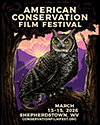
The 2026 American Conservation Film Festival reveals this year’s poster, by Hungarian artist Péter Takåcs.
Péter’s striking illustration features an interpretation of the ACFF Festival mascot—the great horned owl—whose presence reflects wisdom, awareness, and the watchful spirit of conservation. Designed to capture the wonder and urgency of protecting our natural world, this year’s artwork sets the tone for an inspiring weekend of international films and community conversation.
The Festival returns March 13–15, 2026, in Shepherdstown, WV, at Shepherd University.
We look forward to sharing a powerful lineup of over 25 films, Q&As with filmmakers, and conversations that inspire action and connection.
Full Festival passes are on sale here: conservationfilmfest.org/passes – Your pass gives you access to the full weekend of screenings and events.
Each March, DCEFF brings the world’s largest green film festival to museums, embassies, universities, and other cultural institutions across Washington DC.
In addition to the many thousands of audience members attending in-person programming, DCEFF offers year-round virtual screenings to passionate and environmentally-conscious viewers across the United States and the world.
The theme of the 34th Annual Environmental Film Festival in the Nation’s Capital: Against the Current.
Entries welcome now for the GREEN SCREEN International Wildlife Film Festival Germany, Eckernfoerde, September 09th-13th 2026!
We are looking forward to amazing wildlife films from all over the world!
ENTRIES are now welcome for the 20th edition of the GREEN SCREEN Wildlife Film Festival in Eckernförde!
A prize pool of 45.000 € awaits the best wildlife films of the year.
Submission deadline: March 15th, 2026.
The submission fee will be 75 € per film (short films are free; Newcomers pay 30 €). Take advantage of the early bird discount - 25% off the total entry fees for film submissions completed before January 31st, 2026.
The Trees & Seas Film Festival is an international hybrid initiative that connects global audiences through both online streaming and in-person events hosted by community partners around the world.
This approach ensures accessibility while creating meaningful, localized connections through storytelling.
We bring together local communities by using film to inspire conversations, collective action, resilience, and real-world impact.
75% of proceeds support local efforts to mitigate and remediate plastic pollution and advance circular economy initiatives.
"Every film festival is an invitation to a conversation, a space to reflect, to challenge, and to dream of a better tomorrow."
Professional deer stalkers are a vital part of Scotland's ambitions for nature recovery.
Poorly understood and not always appreciated, their work is critical to restoring habitats, and essential for reversing Scotland's legacy of wildlife declines.
As the climate and biodiversity crises escalate, the role of deer managers is evolving, but the need for their knowledge and skills has never been greater.
Nature’s Keepers, the latest film from our Fiadh project, takes you deeper into this story.
Blue Ant Media has renewed its content partnership with British broadcaster Sky to continue supporting the latter’s Sky Nature pay TV channel with content from Blue Ant’s premium natural history brand, Love Nature.
The deal allows Sky Nature to program Love Nature’s original content across Sky UK, Sky Italia and Sky Deutschland with bespoke agreements for each region.
Depending on the territory, Love Nature’s programming highlights include Airborne (4 x 60 min.), which immerses audiences in the point of view of animals in flight; Deep Dive North America (6 x 60 min.), in which presenter Lizzie Daly examines the continent’s diverse marine environments; Aussie Snake Wranglers: Deadly Pursuit (6 x 30 min.), which follows Australian snake handlers answering distress calls; and Pride Rules (5 x 60 min., pictured), following the daily struggles of lion prides.
No camping in an ice field for six weeks or the like was needed for this joint production between the BBC and Guangdong Radio and Television (GRT), because many subjects, while still wild, were filmed in breeding centres, nature reserves or dedicated wetlands on urban fringes.
Love Nature and Sky began their partnership in 2020 following the launch of Sky Nature, with the companies previously extending that partnership in September 2021.
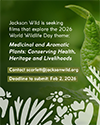
Each year on March 3, the world comes together to celebrate World Wildlife Day, honoring the incredible diversity of life on Earth and the vital connections between people and nature. In partnership with CITES, the United Nations, UNDP, and IFAW, Jackson Wild joins this global celebration through the World Wildlife Day Film Showcase.
Jackson Wild is seeking films that explore this theme — from the healing power of nature to the communities protecting these species — and we invite anyone with a relevant film (of any length) to reach out to scarlett@jacksonwild.org for more details. Deadline to submit is February 2nd, 2026.
Films selected for the World Wildlife Day Film Showcase are available throughout 2026 in free educational screenings. The selection of films will be announced on March 3rd during the virtual World Wildlife Day Celebration
The World Wildlife Day website and social media channels: wildlifeday.org
BTS: The Moon, newts and virtual production
BAFTA- and EMMY-winning natural history specialists Humble Bee Films have become the first production company to collaborate with the University of Bristol’s MyWorld programme at the Sheds on a virtual production sequence for a natural history series. The sequence — part of their new Sky Nature and Blue Ant Media series exploring the Moon’s influence on animal behaviour — set out to make the invisible visible.
Series Producer Dominic Weston and Producer-Director Robert Wilcox reveal the creative ambitions, scientific discoveries and technical challenges behind the production.
Illuminating The Unseen
Dominic Weston: At Humble Bee Films we’re always searching for new ways to tell natural history stories—often by weaving scientific breakthroughs into immersive, character-led narratives. Attenborough’s Life in Colour and Secret World of Sound with David Attenborough both required us to visualise natural phenomena humans cannot see or hear. With MOON: Nature’s Secret Force, the creative challenge was similar, but on a lunar scale.
The Moon is familiar yet strangely unknowable. Its pull on wildlife has inspired myth and speculation for centuries. What we found while making the series was far more surprising… and far more difficult to film.
Sophy Purnell on scoring Moon: Nature's Secret Force
Sophy Purnell, composer and vocalist based in Macclesfield, Cheshire, has scored her first series, Moon: Nature’s Secret Force for Sky and Love Nature, produced by Humble Bee Films. Here, Purnell writes about her work on the production.
Moon: Nature’s Secret Force has been a special experience. The moon is a quiet yet powerful force – shaping tides, migrations and the rhythms guiding life on Earth. I wanted the music to feel organic, ethereal and alive, blending orchestral colour with experimental sound worlds, vocals and unique instruments such as the Yaybahar and a Moon-tuned crystal singing bowl to create something both cosmic and grounded in nature.
The series features three 55-minute episodes. The first episode Dining by Moonlight, rooted in duality, called for music navigating light and dark, beauty and strangeness, danger and stillness. I included rumbling lunar textures, harmonic twists and expressive vocals to create evolving colour and immersive soundscapes. The Waterhole became the emotional anchor – tense string textures and soundscapes with shifts in colour when the baby elephant appeared or behaviours changed under moonlight. A recurring three-note motif, the Moon’s theme, reoccurs throughout the series, carrying wonder, scale and gentle gravitational pull. Film sequence Cactus & Moth is vibrant and luminous, built with rich layers and warped textures, while another sequence, Fluorescent Forest & Colugo embraced “psychedelic ninja” writing: sharp percussion, discordant tones and staccato vocals. Macaques, Plankton and Mantas move between quirky character writing, atmospheric electronics and expansive string-led beauty.
Focusing on courtship and timing, the music for episode two, Moonlit Romance, is more rhythmic and percussive with a sway of romance. Moon moments use ticking percussion, drones, bowls and vocals to convey rhythm and celestial steadiness. The Arctic Fox storyline becomes the emotional centre point of the episode, with motifs evolving across seasons. Solo cello, icy strings and breath-like textures evoke the landscape, while warmer, playful writing highlights cubs’ innocence. Nurse Sharks required a delicate but dynamic approach – subtle violin motifs for her vulnerability while rising percussion builds tension. Sage Grouse and Tree Frogs bring playful, romantic colours. The Grunions push into bold electronic tones, softening when hatchlings emerge and I wanted the Coral sequence to sound like a shimmering “cosmic symphony”, honouring lunar-led renewal.
Scoring the Wild: How Stuart Roslyn and Chris Elmslie Gave Nature a Nightmare
Netflix's Nightmares of Nature flips the script on the traditional nature documentary and gives us some stunning wildlife footage that winds up being kind of unnerving.
To achieve this fascinating genre mashup, the producers turned to composers Stuart Roslyn and Chris Elmslie of the music production company minus5db.
In this interview, Roslyn and Elmslie discuss how they abandoned conventional orchestral scoring for a sound-design-driven approach, the "sound mining" process that built the show's unique sonic template, and how their partnership creates a cohesive, high-level score, even under pressure.
No Film School: Nightmares of Nature offers a fascinating blend of horror and nature documentary. How did the two of you approach that genre mashup from a scoring perspective?
Stuart Roslyn: Blending horror with a nature documentary meant balancing two very different musical languages. On one hand, nature scoring is a bit like writing for animation — the music carries much of the narrative for the creatures onscreen. On the other hand, horror relies heavily on sound design and moments of silence to build suspense and tension. Early on we knew we wanted this score to be driven more by sound-design than conventional melody.
Chris Elmslie: At the start of the project, we spent several days “sound mining,” gathering and crafting an extensive palette of custom elements — found sounds, synthesized textures, manipulated orchestral recordings — and sculpting them to create the sonic template of the series.
Our challenge was weaving a documentary-style score together with enough space and tension for the impact that horror requires. We approached this by identifying the moments that needed punctuation and built everything else around them.
Oxford Scientific's My Otter Diary produced for Japan
All3Media International has partnered with NHK Japan, Oxford Scientific Films and Aranya Parva Creations to co-produce a new 90-minute special version of award-winning wildlife documentary My Otter Diary for the Japanese market.
Filmed over three years, My Otter Diary follows wildlife filmmaker and National Geographic explorer Sugandhi Gadadhar as she uncovers the lives of otters in one of India’s most rapidly changing waterways. The NHK Natural History Department will lead the creative development for the new version with Oxford Scientific Films and Aranya Parva Creations, and NHK’s channel will hold the exclusive broadcast premier window for both the 90-minute NHK version and the 60-minute original international version in Japan. All3Media International will represent the new 90- minute version outside of Japan.
The original 60-minute international version, commissioned by European broadcaster ZDF/Arte and co-produced with All3Media International, Oxford Scientific Films and Aranya Parva Creations, aired on Arte recently.
Bertie Gregory talks to Jacob J. Watson-Howland about his career ...
Jacob J. Watson-Howland, Europe’s fastest-growing U21 podcaster & award-winning BBC-featured photographer, speaks to wildlife film-maket Bertie Gregory.. He Debunks Wildlife Film Myths The Big Screens Don't Show...
Bertie Gregory, a National Geographic filmmaker and explorer, shares the personal sacrifices he has made in his journey, missing numerous friends' and family's milestones. Bertie discusses the competitive nature of his industry and offers advice to young people on the importance of persistence and passion. He reveals his admiration for David Attenborough and emphasizes the significance of teamwork in filmmaking. Bertie also shares his dream of filming extinct animals and the importance of focusing on controllable aspects in challenging situations. Additionally, he encourages viewers to contribute to nature conservation in small yet significant ways.
What sacrifices has Bertie Gregory made to pursue his dreams, and what aspects of his journey are rarely seen? How does persistence and passion play crucial roles in achieving success? What advice would he give his 20-year-old self? Expect to learn about the magic of teamwork in wildlife filming, and how individual actions can positively impact the natural world. Bertie also shares his experience meeting David Attenborough and his thoughts on filming extinct creatures. Join the conversation and find out why focusing on what you can control can lead to unexpected rewards.
Gordon Buchanan, cameraman and presenter on Desert Island Discs
Gordon Buchanan is a wildlife cameraman and TV presenter. He is best known for the Animal Family & Me series of BBC documentaries in which he gets up close to wild bears, Arctic wolves, elephants and reindeer among other species.
Gordon was brought up in Tobermory on the Isle of Mull where he spent his days exploring the island and developed his lifelong love of the outdoors. In 1988, when he was 17, he met the charismatic wildlife cameraman Nick Gordon who invited him to become his assistant for a project to film primates on the island of Tiwai in Sierra Leone.
Gordon spent 18 months in Sierra Leone working with Nick and after that the two of them worked in West Africa and South America. At 22 Gordon set up on his own – his first job was a year-long assignment to make three half-hour programmes for a 14-part wildlife series called Wild Islands.
In 2001 he made his debut as a presenter on the BBC’s Natural World strand. He was appointed an MBE for services to conservation and wildlife filmmaking in 2020.
Gordon lives in Glasgow with his wife Wendy. They have two children.
Desert Island Discs has cast many wildlife experts and broadcasters away including Dr George McGavin, Professor Carl Jones, Sir David Attenborough and Dr Jane Goodall. You can hear their programmes if you search through BBC Sounds or the Desert Island Discs website.
Pablo Behrens is a London-based film director and producer.
His latest film ¨London´s Last Wilderness¨ is about the ecology of a fantastic region close to London.
London’s Last Wilderness is the visual experience of an explorer landing on an undiscovered planet.
Every shot in the film was captured using truthful documentary techniques—no retakes, no setups. What you see happened once, and only once.
Like the first Europeans in the Amazon or astronauts orbiting the moon, there was no time for rehearsals or scripted reflections. The camera moved with the explorer—fast, focused, in the moment.
A mere 30 miles crow's flight from Piccadilly Circus lies a place London largely ignores: the Greater Thames Estuary. It's an ecological and cosmological force hiding in plain sight.
One of its secrets is scale. The estuary rivals London in size. To truly cover it, you need years — exploring north and south banks. From land, sea and sky.
Beyond the coast lies a maze of creeks and shifting islands, shaped by rivers and tides that change everything, twice a day. Half the terrain vanishes and reappears with the North Sea. No two days are the same. No tide repeats.
To be honest with this place, you have to film it all. Across four seasons, in all weather, under every tidal condition. Nothing could be skipped. Nothing faked.
The film has no presenters. This is not exactly a human story.
Lazarus Training – First aid, medical & safety training based in Essex & London.
Lazarus Training specialises in delivering
realistic, scenario-based first aid and safety
training designed for the unique challenges of
the media and production industry. We offer
tailor-made courses to meet your specific
operational needs, whether on location or in a
studio setting. Training can be arranged in
country or on location.
Our training uses professional casualty actors
and real-life scenarios to create immersive,true-to-life experiences, preparing your team to
respond effectively in high-pressure situations.
With a highly experienced training team drawn
from medical, armed forces, and emergency
services backgrounds, we bring unrivalled
expertise, practicality, and realism to every
session—ensuring your crew is ready for
anything.
First Aid on Remote Locations is designed for production teams working away from the office or studio. Whether filming or recording, this course is aimed at groups who will experience a delay in accessing medical care for a colleague injured or taken ill.
Specialist Medical Training for Media Production Teams
When Your Crew is Hours from Help, Preparation is Everything
Filming overseas?
Working in remote deserts, dense jungles, icy mountains, or distant villages?
When you’re out of range of immediate medical support, knowing how to respond in the first minutes after an injury can save lives — and save your production.
Lazarus Training’s First Aid in Remote Locations course is explicitly designed for media production companies operating in areas with limited access to hospitals or rescue services.
This isn’t generic first aid — it’s tailored by professionals, for professionals who face real risk in remote environments.
As a full member of the site, you get a listing in all appropriate sections, a profile page, access to our members' private Facebook Group and priority on your news across the site, this newsletter and our social media accounts.
Membership fees help to keep the site going too ... Your support is much needed and appreciated!
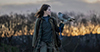
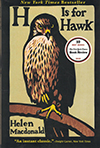
Where is H is for Hawk filmed? All the locations used in the movie based on Helen Macdonald’s memoir
H is for Hawk is based on Helen Macdonald’s memoir, in which they train a goshawk while grieving. But where is it filmed?
Based on the award-winning memoir by Helen Macdonald, H is for Hawk captures an emotional journey of grief after Macdonald’s father dies – and their consequent decision to train a Eurasian goshawk.
Having been a falconer for many years previously, Macdonald combines personal insight with nature writing and the tradition of falconry.
The novel is Cambridge-set, but where did filming actually take place?
Where is H is for Hawk filmed?
The majority of filming took place in locations around South Wales and Cambridge in late 2024 – with the film being co-produced by Cardiff-based Good Gate Media.
Sky is to co-produce a new documentary series about Keiko, the captive male orca who became a global icon after starring in the 1993 blockbuster Free Willy.
Sky will co-produce alongside HBO and All3Media’s RAW, the team behind The Tinder Swindler, Don’t F**k With Cats: Hunting an Internet Killer and Three Identical Strangers. This partnership between Sky and HBO also follows the success of the BAFTA-nominated feature documentary David Holmes: The Boy Who Lived.
The series will follow Keiko’s journey across Mexico, the United States, Iceland, and Norway. With exclusive access to never-before-seen archive footage, from his transport out of Iceland after capture as a two-year-old calf to his later rehabilitation and training.
Paired with personal stories from the people who knew him best, including key individuals who have never spoken publicly about Keiko before, the documentary offers “the most engaging and in-depth portrait yet of the world’s most famous whale.”
Hayley Reynolds, Head of Documentary Commissioning at Sky says “We are thrilled to be partnering with HBO again to co-produce the extraordinary, untold story behind one of the world’s most iconic blockbuster franchises. With Becky Read directing and RAW producing, we’re bringing together world-class talent to explore a story with real emotional and cultural weight — and to deliver it to audiences with the craft and ambition it deserves.”
‘Born to be Wild’ Trailer Spotlights Six Animal Families
Apple TV’s Born to be Wild series debuted an official trailer in honor of World Wildlife Conservation Day, December 4th. Hugh Bonneville, a two-time Emmy nominee for his work on Downton Abbey, narrates the new six-part nature series, which will premiere on December 19, 2025.
“These are family stories about growing up and finding your way in life,” said executive producer Alex Williamson, describing the new series that follows six endangered species. “Each heartwarming film shows the amazing dedication of human foster parents willing to sacrifice everything to return these youngsters to the wild.”
Additional executive producers include Lucy van Beek and Isla Robertson. Tom Payne serves as showrunner and producer, and Sam Hodgson is the editor.
“Filmed over several years across five countries, the six-part documentary series follows six endangered young animals as they grow up in our world but are destined to return to theirs. At the heart of Born to Be Wild lies a powerful truth: in the face of extinction, survival often depends on the extraordinary bonds between humans and animals.
From their earliest days to their journey into the wild, the series highlights the challenges, triumphs, and resilience that define their survival—both for the animals and the remarkable people working to raise and protect them. As each animal finds its place in the world after being orphaned or born through conservation programs—from an elephant calf and two young cheetahs to a ring-tailed lemur pup, a moon bear cub, Iberian lynx kittens, and rescued African penguins—Born to be Wild offers an intimate and emotional look at the powerful relationships between these animals and the heroic humans dedicated to raising, rehabilitating, and rewilding them to help save their species.”
Rhino: Elevating storytelling with Sennheiser in the heart of Kenya’s wilderness
Tom Martienssen of Dustoff Films relies on MKH 8000 RF condenser microphones to capture every intricate sound detail for his latest documentary film
When it comes to wildlife filmmaking, capturing the essence of nature is not just about stunning visuals — sound plays an equally crucial role. In Rhino, the latest documentary by Tom Martienssen, founder of Dustoff Films, the sounds of the African wilderness become a key narrative tool.
The documentary, which follows a group of elite wildlife rangers in Kenya who are working to protect the critically endangered black rhino, is garnering attention for both its powerful conservation message and its exceptional audio quality. At the heart of the film’s sound are Sennheiser’s cutting-edge MKH 8000 series microphones, which helped bring the film’s immersive world to life.
From the deep rumbles of rhino calls to the subtle rustling of the grasslands, the film’s soundscape is as critical to the narrative as its visuals. The use of Sennheiser’s MKH 8000 RF condenser microphones allowed Martienssen and his small production team to authentically capture the environment’s sounds on location. The microphones provided clarity and detail, even in the toughest conditions Kenya’s wilderness could throw at them.
Martienssen, who formerly worked in Combat Search and Rescue and was a qualified team medic, founded Dustoff Films around a decade ago. Inspired by his experiences on the frontlines of war and the pressing need for greater environmental awareness, his work quickly evolved to focus on wildlife conservation. Dustoff Films is now committed to producing powerful documentaries that tackle critical issues such as climate change, conservation, and human rights.
In Rhino, Martienssen and his team have chosen to share a story of hope amidst environmental jeopardy. The film chronicles the extraordinary recovery of Kenya’s rhino population, which, after facing near extinction in the 1970s, is now thriving thanks to successful conservation efforts. However, this resurgence has come with its own set of challenges: the rhino population has outgrown its habitat, causing territorial disputes and aggression among the animals. In a groundbreaking move, wildlife rangers are now tasked with relocating the animals to new areas to ensure their survival and growth. The documentary shines a light on the tireless and dangerous work of the rangers, the positive outcomes of the conservation efforts, and the larger global importance of protecting endangered species. Filming wildlife is inherently challenging, especially when it comes to capturing authentic sounds. While the breathtaking visuals often steal the spotlight in wildlife filmmaking, sound is just as essential in creating an immersive experience.
“We wanted the sound to be real,” says Martienssen. “We didn’t want to recreate wildlife calls or add in anything that wasn’t there in the moment. It was important that the sounds we recorded on location were the ones you’d hear if you were actually there with us, in the middle of the African savanna.”
National Geographic unveils adventure docuseries with Will Smith
National Geographic has slated a January 13 premiere for its seven-part original series Pole to Pole with Will Smith.
The series (pictured), which will stream the next day on Disney+ globally and Hulu in the U.S., follows the Oscar-winning actor on a journey across all seven continents, from the icefields of Antarctica, the jungles of the Amazon, Himalayan peaks, African deserts, Pacific islands and more.
In the company of scientists, explorers and local experts, Smith will throw himself into challenges such as skiing to the South Pole, catching a giant anaconda, milking a venomous tarantula and diving under the North Pole ice over the 100-day trek.
Pole to Pole with Will Smith is produced by Westbrook Studios, Nutopia and Protozoa. Smith also serves as executive producer alongside Westbrook’s Terence Carter and Miguel Melendez; Nutopia’s Jane Root, Peter Lovering and Tom Williams; Protozoa’s Darren Aronofsky and Ari Handel; and National Geographic’s Sean D. Johnson and Bengt Anderson.
This marks the third collaboration between Smith and the network after 2018’s One Strange Rock and 2021’s Welcome to Earth.
Generative AI Just Killed the Wildlife Video. Should You Care?
You're not crazy—the critters on Instagram are wilder than ever, thanks to artificial intelligence-generated video. Our articles editor takes a deep dive into the technology, culture, and ethics around this new footage.
A black bear lumbers through a suburban front yard that’s been decorated for Halloween. One of the decorations—an animatronic ghost—begins to shake and moan and light up, its sensor triggered by the approaching animal. Terrified, the bear turns and sprints away, only to slam head-first into the homeowner’s pickup truck.
This clip caught my attention when it popped into my Instagram feed a few months ago. I am a huge fan of wildlife videos—specifically, footage of whimsical animal activity captured by wildlife cameras, dashcams, or people’s home surveillance equipment. As I have done far too many times, I mindlessly clicked the “like” button and then shared the bear video with some friends, before returning to my braindead scrolling.
Unbeknownst to me, this video was a fake, just another AI-generated clip circulating the Internet. Since I validated it with my click, Instagram’s algorithm immediately chummed my feed with an impressive tonnage of wacky AI wildlife videos. In quick succession I watched a porch-pirate raccoon attack a decorative clown; a barn owl peck a rock climber on the side of El Capitan; a marauding squirrel chase a grizzly bear down a bike trail.
I hoovered up this content, watching hundreds of videos. Yes, I knew that they were fake. But they appealed to my brain in the same way that real ones do—my neurons tingled as I endlessly scrolled. Within a matter of hours I’d developed an addiction to AI wildlife videos.
This affliction was short-lived, and after a few days, I came to an unfortunate realization: I could no longer discern an authentic wacky animal video from one created by generative AI.
“If you start to think some of it can be fake, you start to think all of it can be fake,” Ben Colman, an AI expert, told me. “And pretty much everything you see or hear on the Internet can be deepfaked now.”
How AI-Generated Animal Videos Mislead Millions About Nature
A house cat stares down a leopard in a suburban backyard. The big cat growls, the child in the background freezes, and—against all odds—the cat lunges. The leopard turns tail and bolts. Within seconds, the clip racks up thousands of likes and comments: “Cats really are fearless!” or “This is why I love animals!”
Except, of course, none of it ever happened.
The leopard, the child, and the heroic cat are all creations of artificial intelligence. Yet the video has been shared tens of thousands of times across TikTok, Facebook, and X, fooling millions into believing it’s real. And it’s not alone. Other viral AI-generated wildlife clips show raccoons riding crocodiles down jungle rivers, bears playing on trampolines, and deer politely joining family picnics. They’re funny, heartwarming, and almost believable—but according to scientists, they’re also dangerous
A new study from the University of Córdoba (UCO) in Spain warns that this wave of synthetic wildlife videos is quietly eroding public understanding of nature. Far from being harmless entertainment, these ultra-realistic fabrications are distorting how people—especially children—think animals behave, what species are truly endangered, and even what kinds of creatures live near them.
“The main conclusion from our study,” José Guerrero Casado, lead author of the research, explains to A-Z Animals, “is that AI-generated wildlife videos often present distorted or unrealistic portrayals of nature. These misrepresentations can spread misinformation, especially among children and audiences with limited ecological knowledge.”
As social media becomes a dominant source of environmental learning, the researchers say this flood of digital fantasy is undermining conservation efforts and fueling a dangerous disconnect between society and the wild world it claims to love.
Why Are AI-Generated Wildlife Videos Harmful?
To understand the implications AI-generated wildlife videos have on audiences, the Córdoba team analyzed dozens of viral AI-generated clips across the social media platforms TikTok, Facebook, Instagram, and X, examining how often they were shared, liked, or commented on to measure their influence. They found that these digital creations often depict animals acting in ways that defy biology and ecology, predators playing gently with prey, apex carnivores wandering suburban lawns, and rare species appearing as common backyard visitors
“Some AI-generated videos depict highly implausible or exaggerated human-wildlife interactions—such as large carnivores entering homes, attacking pets, or even harming people,” Casado says. “These videos are often presented in a format that imitates low-quality security footage, which can make them appear more authentic.”
Such fantasy-filled depictions can have subtle but serious consequences. When young audiences or less scientifically literate viewers take these portrayals at face value, they form unrealistic expectations about the natural world. “When social media users, especially children or individuals with limited ecological knowledge, perceive these videos as real, they may develop distorted views of wildlife,” adds Casado.
The problem lies not only in spreading falsehoods but also in creating a false sense of familiarity. Videos that portray dangerous species as friendly or endangered species as abundant can distort the sense of rarity and risk that conservation messaging depends on. They erode the emotional urgency that motivates people to protect wildlife.
The viral “cat versus leopard” clip is a particularly damaging example. The idea that a leopard would appear in a European suburb—or that a domestic cat could scare one away—is pure fiction, but the imagery feels plausible enough to shape viewers’ beliefs about big cats.
This distortion becomes more dangerous as AI tools grow more accessible. Videos that once required film studio budgets can now be created on a smartphone in seconds.
“Some AI-generated videos depict highly implausible or exaggerated human-wildlife interactions—such as large carnivores entering homes, attacking pets, or even harming people,” Casado explains. “These videos are often presented in a format that imitates low-quality security footage, which can make them appear more authentic.”
The psychological effect may swing in two directions. On one hand, fake videos showing predators in human spaces can heighten fear, making species like leopards, wolves, or sharks seem more threatening than they are. That, in turn, could reduce public sympathy for conservation measures. On the other hand, overly cute or humanized portrayals of wildlife—animals acting like pets or performers—could make viewers complacent, leading them to believe that endangered species are plentiful or that wild animals are safe to approach. Both extremes weaken conservation attitudes and blur the line between wildness and domestication.
“Not even AI could imagine that!” Photographer finds unreal-looking sea creature in Cornwall
Rainbow slugs are being found more frequently in the UK as a result of warming waters.
A wildlife photographer in Cornwall has shared hypnotic footage of what might be the UK’s most beautiful slug.
“Have you ever seen such a colourful slug?” says wildlife filmmaker Jacob Rheams on Instagram while sharing footage of the nudibranch creeping along in the rockpools.
The multicolour animal looks like a make-believe creature with its bright pink body, and pink and purple cerata (finger-like projections that allow it to breathe) flecked with orange and yellow “frosted tips” at the end.
First documentary on Chinese white dolphin opens across China
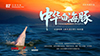
The documentary "Chinese White Dolphin," jointly produced by China Media Group, Guangdong Radio and Television, and Zhuhai Media Group, opened nationwide on Friday (12/12/25).
Six years in the making, it is the world's first documentary film centered on the Chinese white dolphin.
The Chinese white dolphin is the only marine mammal bearing the name "Chinese." Listed as "Vulnerable" on the IUCN Red List and protected as a national first-class species, its global population is estimated at around 6,000. More than 4,500 live in Chinese waters, including over 2,000 in the Guangdong–Hong Kong–Macao Greater Bay Area.
The 82-minute film takes the construction of the Hong Kong–Zhuhai–Macao Bridge and the jointly hosted 15th National Games of the three regions as its backdrop. The story follows a dolphin named "Zhuzhu" on her journey home.
Upholding principles of scientific authority, accessibility, vivid storytelling and international perspective, the production team worked with institutions including the Chinese Academy of Sciences and the Aquatic Wildlife Conservation Branch of the China Wildlife Conservation Association.
Their filming footprint covered China's Guangdong, Guangxi, Hainan, Hong Kong and Macao, as well as the United States, Sweden, the United Kingdom and Thailand. The team conducted more than 100 offshore shoots, traveling over 3,600 nautical miles, and interviewed 21 scientists and 17 conservationists, collecting over 1,000 hours of valuable footage.
Director Yan Dong said the film depicts not only the migration and survival of the Chinese white dolphin, but also a life force that crosses oceans and connects us all.
ZDF Studios to shop WildBear’s “Baby Animals Down Under” globally
ZDF Studios, the commercial production/distribution arm of German pubcaster ZDF, has picked up global rights for Baby Animals Down Under, a 6 x 1 hour docuseries from Australia’s WildBear Entertainment
The series, filmed across the diverse geography of Australia, captures the first steps of baby marsupials, monotremes, birds, reptiles and marine creatures while also featuring the unique habitats they call home. From newborn koala joeys the size of jelly beans to dingo pups learning to survive in the unforgiving outback, the series documents the challenges faced and survival strategies employed by each species.
The deal, brokered by Wild Thring Media, is the latest in a longstanding partnership between ZDF Studios and WildBear — other recent deals include an international distribution pact for history series Fatal Conflictsunveiled in August, and a pick-up of three factual titles, ranging from natural history to factual entertainment, last November.
Behind the scenes with Too Wild wildlife filmmaking course
The Too Wild initiative that sponsors local students from communities near game reserves ...
Offering immersive training, bridging the gap between locals and conservation areas to foster new talent, offering hands-on experience in capturing wildlife stories, making a real impact in conservation through community upliftment and skill-building.
To really immerse our audience in the Kingdom of Nsefu, we wanted to do justice to the rich soundscape that accompanies our character’s daily lives: from the gurgling Luangwa River with its honking hippos to the bush squirrel alarm calls, the African wild dog’s unique twitters, the moody trumpeting elephants, the hyena’s haunting whoops, to the bones cracking at a lion kill.
The legendary recordist Chris Watson, who has been recording sound for BBC wildlife documentaries for over 25 years, was the perfect person to capture the varied auditory landscape of South Luangwa.
Q: Why is sound so important to the Kingdom series?
One of the things about coming here to the banks of the Luangwa River is that it's a wonderful mosaic of habitats, and so there are different sounds within a few hundred metres of each other and also different animals. And each habitat has its own signature sound. What I've really enjoyed about the process of recording here is being able to tap into that sound. We’ve been recording it in surround sound, so what I’m hoping to do is put the audience where my microphones were when I made the recording and immerse them in each habitat.
The animals also use the acoustics of their environment to broadcast their message. When you hear the echo of lions’ voices and the reverberation of hyena whoops, I’m sure that it helps them localise themselves within the habitat. For the predators, they need to be able to be very quiet and listen to the calls of the animals, the antelope that they’re stalking.
And for the antelope, they need super hearing to be able to feed: when they get their heads down in the grass, they can’t see something like a leopard approach. So sound is a key element to their lives, and I’m really excited about collecting those beautiful, detailed minutiae of sound, which help to understand the animals.
David Attenborough Leads at 99! UK Documentary Ratings Snapshot for 2025
A hard-to-get UK ratings snapshot for 2025 thru late October reveals several notable Takeaways:
BBC1 tops all of the Top 5 most-viewed broadcast documentaries.
The UK’s unscripted ecosystem delivers audiences whose scale and shares are the envy of the U.S. and other markets.
Netflix‘s #1 doc earned a fraction of the audience for the BBC’s documentary leader.
However, the decline in broadcast viewing is captured by comparing 2025’s most viewed doc (Gavin & Stacey, 6.7m) with 2017’s (Blue Planet II, 14m viewers.)
Attenborough
David Attenborough’s KINGDOM was broadcast on BBC1 in early November, earning an impressive 4.8m viewers and 34.4 share.
National Geographic has appointed 72 Films senior exec Cate Hall to its UK commissioning team.
Cate Hall (pic) will take on the commissioning editor role recently vacated by Simon Raikes with immediate effect.
She will drive the development and commissioning of high-profile, globally appealing factual programming for Disney+, Hulu and Nat Geo’s linear channels, reporting into Nat Geo’s senior vice president, Bengt Anderson.
Hall joins from 72 Films where she served a second stint as head of specialist factual from 2023.
She previously served a two-year term as the indie’s specialist factual lead before joining BBC Studios’ Documentary Unit as its creative director of development.
Doc Services has decided not to hold its international international documentary festival Sunny Side of the Doc in 2026.
In a statement, the organisation said: “This difficult but necessary decision results from a combination of factors: the loss of its main European grant, a decline in key financial support, as well as organisational constraints that make it impossible to deliver an event that meets the expectations and challenges of today’s global audiovisual ecosystem.”
Sunny Side of the Doc has brought together the international documentary community in La Rochelle for 35 years, to find co-financing for projects, elevate new voices and foster connections between filmmakers, producers, broadcasters, distributors, institutions, audiovisual and cultural partners.
Collaboration with Brazil and Latin America will continue in 2026 alongside the LatAm Content Meeting. The call for projects remains open until 10 December 2025, ahead of the three pitch sessions led by Sunny Side of the Doc from 13 to 15 April 2026 in São Paulo.
The statement continues: “This turning point marks the end of one cycle and may be the beginning of a new one, which can only be conceived as a complete reconstruction. If the prospect of a return as early as 2027 were to emerge, it would rely on a project built with and for the documentary industry. A new chapter can be written, and it feels more essential than ever.”
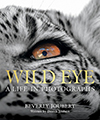
Beverly and Dereck Joubert reflect on 40 years of African wildlife photography in new book
For more than 40 years, Beverly and Dereck Joubert have lived with, photographed and filmed African wildlife.
Their images bear witness not just to the majesty of life on the continent, but also the host of threats that confront both the animals and the wilderness.
¨A magnificent large-format coffee table book featuring the dazzling wildlife and haunting landscapes of the African continent, with more than 250 four-colour photographs. From one of National Geographic's most popular photographers and her filmmaker husband, these luxe retrospective documents a 40 year odyssey through Kenya, Botswana, Zimbabwe, and Tanzania. This dazzling book of photography is a vivid journey into Africa’s illuminating landscape and all its varied creatures. One of the most spellbinding places on the planet, the continent is home to animals of all sizes and species, making it one of the most sought-after destinations in the world. Prizewinning photographer and National Geographic explorer Beverly Joubert has spent more than 40 years documenting the wildlife that traverse the African terrain with her filmmaker husband, Dereck. Their passion for animals has resulted in striking images that tell an arresting story in an instant, opening a window into the souls of their subjects and inspiring viewers to fight for their survival. Each alluring shot includes Dereck's observations on the wildlife they hold so dear. Organised into five themes, the book reveals the essence of Africa: *Awe: a leopard, his eyes glowing, from an acacia tree *Compassion: a lion devouring a buffalo *Humility: a baboon silhouetted against the moon *Intimacy: a baby elephant snuggling with his mother *Legacy: a rhino being rescued from poachers Both profound and inspiring, this majestic book forms a bridge between the animals, the lands, and the photographer. Each page is an impassioned call to conserve all forms of life - no matter what it takes.¨
Lapland Studios launches 30-episode Reindeer series
Lapland Studios, a new arm of the Lapland Group which stages live festive events, is launching an animation series Lumo the Lapland Reindeer, 30-episodes focusing on the story of Lumo and his discovery of the magical Lapland World.
The direct to digital series follows four characters, designed to show pre-school children that every new experience, big or small, is an adventure and part of growing up. It will air via YouTube Kids.
Lumo The Lapland Reindeer has been developed alongside TeamFalco, using audience affinity to form the concept for the platform. The creative was developed in-house at Lapland Studios under the direction of Chris Battle, Creative Production by Melissa Czaja, previously of WildBrain and James Baker, Chair of Lapland Studios, and previously President of Red Arrow Studios.The series production, led by Head Of Lapland Studios; Chris Battle, will air its first episode on Friday 12th December and drop 2 episodes weekly.
Expect the unexpected: Bringing down a giant – by Jo Harvey, Producer/Director
The first rule of wildlife filmmaking is simple - keep a respectful distance from the animals so as not to impact their behaviour. Which is why crouching nose-to-nose with a one-tonne giraffe was never part of my plan. That brings me to the second rule of wildlife filmmaking – expect the unexpected!
...a giraffe had been spotted with a wire snare around its leg.
A quiet first day – or so we thought
Our first day filming with conservationists Thandi Mweetwa, Henry Mwape and their team at the Zambian Carnivore Programme [ZCP] was meant to be low-key. This was the first time our British and Zambian crew had come together. I’d planned to spend the day easing us all in – fitting radio microphones, rigging cameras onto the ZCP truck and getting Thandiwe and Henry used to multiple cameras pointing at them, while acting completely naturally!
With drones in the air and tracking shots underway, everything was going to plan… until the radio crackled… a giraffe had been spotted with a wire snare around its leg. In an instant, our low-key day was over. When an emergency call comes in, the teams drop everything to go to their aid, 24/7, 365 days a year.
The Epic New Landmark Natural History Series, Kingdom, Premieres Saturday, January 24 On BBC America And AMC+
BBC AMERICA’s highly anticipated landmark natural history series, Kingdom, set to premiere on Saturday, January 24 at 8pm ET/PT on BBC AMERICA and AMC+, chronicles the dramatic real-life sagas of four African rival animal families – leopards, hyenas, wild dogs, and lions – as they all fight to claim a remote Zambian paradise as their home. Who will succeed in ruling this precious kingdom? Narrated by renowned naturalist and three-time Emmy® Award-winner Sir David Attenborough (Asia, Planet Earth III), all-new episodes of the major six-part natural history will premiere weekly on Saturdays.
3 films selected for the European Wildlife Film Awards 2026!
Marco Polo are delighted to announce that three of their documentaries are part of the Official Selection of the prestigious European Wildlife Film Awards 2026.
The films are all part of the ‘Beaches of Europe’ series and portray three unique coastal regions of Europe, impressively demonstrating how closely natural processes, biodiversity, climate change and human influences are intertwined.
The selected films are:
‘Beaches of Europe – Spiekeroog’ (A film by Herbert Ostwald, ZDF/Arte, 2023) ‘Beaches of Europe – Santorini’ (A film by Annette Scheurich, ZDF/Arte, 2023) ‘Beaches of Europe – Sardinia’ (A film by Mi-Yong Brehm, ZDF/Arte, 2023)
The European Wildlife Film Awards ceremony will take place on 7 February 2026 in Hamburg.
We focus in documentary making on land and underwater, we do high speed, infrared and thermal filming. We can also help as fixers in Cyprus and Greece.
Victoria Clarke – an Australia-based Presenter/Host/Narrator
Victoria is a freelance television presenter, broadcaster, science communicator and narrator for documentaries and television series specialising in wildlife, science, natural history and adventure/travel.
She studied a Bachelor of Science in Zoology at the University of Queensland, which she paired with formal training in television presenting and communications, and has since combined the two fields as a host for wildlife and natural history media.
Her work as a wildlife presenter has taken her to many interesting and remote places in the natural world, and she is an avid traveller and adventurer.
Victoria believes in the power of storytelling, and it's her objective to share information about our planet, and the scientific discoveries made here, to the wider community through compelling, entertaining and accurate stories.
Victoria knows that through the art of nature filmmaking, the importance of conservation and exposure to the beauty of the natural world can be truly understood and appreciated.
Massimiliano (Max) Finzi – a Marine Supervisor – Assistant Underwater Camera – Water Safety Diver
Max is a professional Marine Supervisor and Safety diver in Media, Film and HATV at Netflix, Prime, Lionsgate, Disney, BBC amongst others.
Based in both the UK (Devon) and Italy.
He says" "I have great experience in water diving safety. I am a PADI Master Scuba Diver Trainer, an SSI Divemaster Instructor and the HSE Scuba L.4 and I’m also Instructor of many diving specialties; I’m an underwater camera assistant and also operate independently. I also have experience of training cast and crew in scuba diving to facilitate underwater sequences.
I have done over 10,000 dives in extremely different places and locations such as sea, ocean, river, altitude, lake, caves, under ice, deep and wrecks using all different equipments; I have worked as a dive instructor and dive manager for 21 years and in the last 5 as part of a team in the Marine department in film and TV.
Before becoming a diver in 1996 I was a studio still-life photographer a profession that I brought with me underwater;
I have the Gates STO (Setup/Test/Operate) certification made by Esprit Film; RYA PowerBoat L2, VHF Radio Operator, Day skipper.
I also have the IRATA Rope Access certification L1 and A1/A3 Drone open category.
Mojo Bridge, the company under which Halo Post Production, Evolutions and Relay trade, has been placed into administration, following a strategic review.
The company has issued the following statement:
¨It is with deep regret that Mojo Bridge, the company under which Halo Post Production, Evolutions and Relay trade, has been placed into administration. Everyone involved is acutely aware of the personal and professional impact this announcement may have, and we want to acknowledge at the outset the human cost behind a decision of this nature.
“When the Halo Group acquired Evolutions and Relay in August 2024, supported by a new investor, the intention was to bring stability and renewed momentum to two businesses that had already been navigating extremely difficult trading conditions. Those ambitions were rooted in good faith and a genuine desire to protect jobs, preserve talent and support teams who had worked tirelessly through a challenging period for the industry.
In late August this year, ENVY was asked to review Mojo Bridge’s operations and explore whether a strengthened structure or revised strategy could help return the business to long-term financial health. ENVY entered this process with sincere optimism and with the belief that its culture, operational approach and technical expertise might help chart a viable path forward. Throughout, we remained mindful that behind every strategic decision were individuals, teams and livelihoods.
The decision to file for administration follows several months of detailed strategic and financial review. It was taken only after every realistic option had been explored, and only when it became clear that no responsible alternative remained. This outcome is deeply disappointing for all parties, and we recognise the uncertainty and distress it may create for many people connected to the business.
As the review progressed, it became increasingly evident that the financial pressures inherited prior to the acquisition were far more severe than initially understood. Despite constructive collaboration and a shared determination to find a solution, the scale of the challenges ultimately made continued partnership unsustainable. We recognise the strain this places on staff, clients and partners, and do not underestimate the seriousness of the situation.¨
Evolutions Post Production, particularly through its Bristol facility, has provided finishing and technical services for numerous high-profile wildlife and natural history projects.
Notable wildlife documentaries and series featuring work by Evolutions include:
Chimp Empire (2023)
: Evolutions provided all picture finishing for this Netflix series. Head of Grading Blair Wallace won the HPA Award for Outstanding Color Grading – Documentary for his work on this project.
The Green Planet : This BBC series, narrated by Sir David Attenborough, utilized Evolutions' specialized HDR and UHD workflows for its immersive portrayal of plant life.
Dynasties II : Evolutions worked on this BBC series that follows the dramatic lives of individual animal families.
Seven Worlds, One Planet : The facility supported this major natural history production that explores the distinct wildlife of each continent.
The Year Earth Changed : A documentary special for Apple TV+ that examined how nature responded to global lockdowns.
Jago: A Life Underwater : A collaborative project with director James Reed, where Evolutions provided color grading services.
A Real Bug's Life : Supported by Evolutions' Bristol team for specialized natural history post-production.
The facility is a preferred partner for major production companies such as Silverback Films, Plimsoll Productions, and the BBC Natural History Unit due to its expertise in high-end natural history workflows.
The Real Yellowstone documentary used DaVinci Resolve Studio
The Real Yellowstone was Peters first documentary using DaVinci Resolve Studio for both offline and online editing. After the experience Peters stated that Resolve provides an end to end workflow that’s hard to beat.
After being tapped by award winning Director and human rights advocate Tom Opre to assist with recuts for his “Killing the Shepherd” documentary, Peters quickly signed on to edit the subsequent two films in Opre’s series, “The Last Keeper” and “The Real Yellowstone.” These films reveal how true conservation begins with respect for the people who live closest to the wildlife.
An editor and colorist with expertise in commercials, television and feature films, Oliver Peters says that “‘The Real Yellowstone’ was my third documentary film for Opre but the first using DaVinci Resolve Studio for both offline and online editing. The switch to Resolve came at the urging of the colorist, largely to eliminate relinking issues he’d encountered in the past with other systems,” said Peters. “Up until now, I’ve used DaVinci Resolve Studio for color grading and some minimal editing tied to finishing work, and ‘The Real Yellowstone’ is the first project where I used Resolve as my principal editing application, start to finish.”
“The Real Yellowstone” delves into the lives of ranching families who find themselves at the heart of a complex struggle: rising real estate prices, predator attacks, and a powerful conservation movement that seeks to reshape the landscape they call home.
“It’s an honest look at modern life in the American west, which is quite different from the way it’s presented in TV fiction,” noted Peters. “As a documentary, we tried to give voice to all sides, draw some observations, and raise awareness for ideas that sometimes challenge popular concepts.”
Chris Packham narrates ‘Killing our countryside’, a film which reveals the damage done to our wildlife and countryside by the shooting industry’s mass release of tens of millions of pheasants and partridges every year.
The film, and the accompanying campaign, make the argument for a ban on the production and release of birds for shooting.
The report details not only the horrific cruelty of so-called ‘game bird’ shooting, but also the devasting impact that it has on our environment and wildlife. Every year around 40-60 million non-native pheasants and partridges are released into the British countryside, trampling flora and outcompeting native wildlife for food. Toxic lead shot pollutes the land and waterways, poisoning animals. In reality, shooting is a million miles from its portrayal as a rural, natural pastime.
Viral animation uncovers the shocking mistreatment of foxhounds
– Narrated by Chris Packham
We’ve just released our latest animation, narrated by Chris Packham! This 60-second film exposes the shocking mistreatment of foxhounds by hunts and reveals how the hunting world is exploiting these animals in a desperate attempt to protect their cruel pastime.
Groundbreaking research carried out by Protect the Wild earlier this year found a staggering 2,444 welfare incidents involving foxhounds in just the last 3 hunting seasons and that’s what motivated us to create this animation.
I won’t say too much more, I’d rather you see it for yourself.
Since going live last night, the film has already been viewed over 600,000 times, and thousands of people have joined the call urging the Government to deliver on its promise to ban trail hunting.
Please share or forward this email to family and friends, and encourage them to add their names to the petition too.
With thanks to Chris Packham for his continued support and the brilliant Fire Lily Studio for putting it together for us.
Join Viva! for an inspiring – and deeply thought-provoking – Trilogy of Talks that reveal the truth about our connection with animals and the natural world.
From the hidden horrors of industrial farming to the wild magic of ecological restoration, Viva! founder Juliet Gellatley and Randal Plunkett, the 21st Baron of Dunsany, share powerful, personal journeys from their extraordinary lives.
Viva!'s Juliet Gelatley transports an audience back to her first experience of entering a factory farm, describing how it felt to be a young teenager traipsing through rows upon rows of pigs confined to cages, gnawing on their metal prisons – and how this moment led to her dedicating her life to saving animals.
For over 30 years, Viva! has been at the forefront of animal campaigning and this is Juliet's personal and unfiltered story of how she launched and sustained the vegan charity through its ups and downs.
Randal Plunket, the 21st Baron of Dunsany, discusses how he is transforming his inherited estate into a wildlife haven through the 'rewilding movement', a form of environmental restoration that he has rebranded as 'V-Wilding'. By rewilding a third of his considerable estate, Plunkett has seen huge swathes of lost species return to their natural habitat, driving the return of biodiversity. In this talk for Viva!, he uses his trademark humour and wit to discuss the cost of progress, the unbelievable arrogance of humans and his contributions to natural restoration.
Viva! founder and director Juliet Gellatley delivers a searing indictment of the meat industry, describing it as a "vast machinery of greed" that desecrates the sanctity of life. Drawing on decades of firsthand experience entering factory farms, she recounts the horrors hidden behind their walls and exposes how animals are reduced to mere cogs in the machine of death. In this talk, Juliet unpacks the megalithic power of the industry, from its immense financial backing to its far-reaching influence and relentless stream of misinformation. She confronts the uphill battle of challenging its lies while calling for a dismantling of the system that profits from suffering.
The
Plant Based News (PBN) newsletter is a product of the Plant Based News media platform, which provides news and content related to plant-based living, sustainability, and ethical consumerism.
The newsletter distributes information, likely via email, covering a wide range of topics including vegan recipes, environmental issues, health and fitness, news, and culture.
PBN uses a team of experts and storytellers to present data and news in a way that is both informative and entertaining.
Content: The newsletter covers a variety of subjects, such as the latest on plant-based food trends, health and nutrition, environmental concerns, and ethical consumerism.
Purpose: It aims to educate and inspire its audience to make the shift to a more sustainable lifestyle by providing reliable information and resources.
Origin: Plant Based News was founded by Klaus Mitchell in 2015, starting as a YouTube channel and expanding to include other platforms and media like the newsletter. Robbie Lockie later joined as a co-founder and director of the company.
Expertise: The platform draws on a network of health and environmental experts and has won several awards for its work.
Cooked with Love: This Vegan Mystery Thriller Could Change The Way We See Our Food
A new feature film uses psychology and storytelling to reach the hearts of non-vegans
In 'Cooked With Love," director Bruno Bilandzija hides a powerful vegan message within a mystery thriller...
As veganism moves further into mainstream culture, filmmakers are exploring fresh ways to tell stories that awaken compassion. Now, a new feature film is taking that idea to the next level by disguising a powerful vegan message inside a vegan mystery thriller.
Cooked with Love, a forthcoming theatrical film by the Croatian writer-director-producer Bruno Bilandzija, has been described as a “Trojan horse for compassion.”
Cooked with Love blends the intensity of a mystery thriller with the moral insight of a documentary, and is designed to appeal even to audiences who would never watch a film labeled as “vegan.” Bruno told Plant Based News (PBN), “I set out to create a film that condenses the long journey to compassion into a single, transformative experience.”
A Decade After Its Release, ‘How Not to Die’ Finds a New Life on Screen
The 2015 bestseller ‘How Not to Die’ by Michael Greger, MD becomes a free documentary, translating nutrition science into a consumer-facing film about diet and disease prevention.
If you read 2015’s bestselling book How Not to Dieby Michael Greger, MD, FACLM and Gene Stone, you already know the premise that made it a cultural lightning rod: for most people, the greatest threat to long-term health is not genetics or bad luck, but what ends up on the plate day after day.
Now, on its 10-year anniversary, the book moves from page to screen in How Not to Die, a new documentary streaming free on UnchainedTV, translating Greger’s data-heavy arguments into something far more immediate and visual.
From bestseller to screen
The film stays tightly aligned with the book’s core argument, examining how the standard Western diet contributes to the most common chronic diseases in the US and other industrialized countries. Heart disease, type 2 diabetes, obesity, kidney disease, liver dysfunction, and neurodegenerative conditions, including dementia and Alzheimer’s disease, are all addressed through peer-reviewed research and clinical experience. The documentary also explores links between diet and colon, prostate, and other digestive cancers, grounding each claim in nutritional science rather than wellness folklore.
Jane Velez-Mitchell, president of UnchainedTV, a non-profit streaming platform, framed the film’s purpose in direct terms: “The crucial information in this powerful, meticulously researched documentary can help people avoid preventable lifestyle diseases and improve their chances of living a long and healthy life,” she said in a statement. “What could be more important than that?”
Vegan Camp Out are offering animal rights activists 25% off their festival ticket and donating £10 from each activist ticket sold to animal rights organisations.
Vegan Camp Out is the world’s largest vegan camping festival as well as being the most international, with campers coming from over 40 different countries each year! The event is 4 days/3 nights of camping, talks, live music, afterparties, yoga/meditation classes, workshops and of course the UK's best vegan food!
Email vcoactivists@gmail.com to get your personalised discount code and let them know which organisation you do activism with.
My Role on the Katavi Series – ¨Over several years, I had the privilege of working on the Katavi series during both the dry and rainy seasons, immersed deep in the bush. My primary role involved extensive long-lens cinematography from a vehicle, supported by my incredible local drivers – Naiti and Kahimba – whose tracking skills and instinct in the field were invaluable.
Alongside ground-based filming, I also operated drones to capture aerials and dynamic bird-following shots that helped bring the vastness and drama of Katavi to life from above.
During my time there, I picked up some “kidogot” Swahili, basic tracking techniques, and, more importantly, a profound respect for the land and its rhythms. I filmed intense and emotional wildlife behavior, including dramatic hippo fights, a rare pelican kill, and powerful sequences of infanticide – alongside many other unforgettable moments from this remarkable series.
A highlight of this experience was being mentored and deeply inspired by Owen Prümm – an extraordinary filmmaker, cameraman, and bushman. His passion and presence in the field made this one of the most meaningful and unforgettable chapters in my career.¨ Luana Knipfer
Andreas Fiskeseth – Underwater filmmaker, drone pilot and DP based in Thailand.
Born and raised on the Western coast of Norway, I moved to Thailand at 23 to pursue a career in underwater filmmaking.
I'm a certified PADI Divemaster with 14 years experience and 3000+ ocean camera dives.
I've had the pleasure of working on various films, documentaries and tv-shows for clients such as the BBC, Disney+ & UFC.
Having dived all over Thailand I also offer consultations and location scouting, both for remote and underwater destinations.
I'm also an experienced drone pilot & timelapse photographer and have shot art films, music videos and promo videos.
While I'm experienced shooting with cameras from RED, Sony, & Canon my personal setup consists of a Panasonic Lumix GH7 for underwater – a great rig paired with the right glass.
Also the owner of a DPV rental company so I have access to some very handy DPV setups for underwater filmmaking to create unique images or keep up with fast moving subjects.
Located in Thailand but available to work anywhere. Speak Norwegian and English fluently.
I'm passionate about the ocean and marine conservation and this is reflected in my safe conduct around any subject or reef.
I also have a huge 6K/4K Stock library of mantas, whale sharks, macro, reef, turtles etc.
Wildlife Film Productions inc. – a boutique production company specialized in creating groundbreaking natural history films for audiences worldwide.
Wildlife Film Productions (WFP) was founded by Alex Jones, an Emmy-nominated and Panda award-winning Director of Photography (DOP) who has worked with top broadcasters like Disney, NatGeo, BBC, Netflix, and Apple. With over a decade of experience, Alex is known for his breathtaking macro and long-lens work, creating world-class wildlife films. Initially hired as head DOP on many shows, he quickly became involved in the creative direction and writing, showcasing his storytelling talents beyond the camera. His ability to shape the overall vision of a project adds a unique depth to every production.
Award-winning filmmaker Jaap Perenboom joined Alex after a chance encounter while filming in the jungles of Corcovado, Costa Rica. Their mutual passion for wildlife filmmaking brought them together, and they soon realized they shared the ambition to build a boutique Blue-Chip wildlife film company. With Jaap’s background in both business and filmmaking, he brings a rare combination of business savvy, strategic insight, and hands-on experience as a DOP, perfectly complementing Alex’s creative vision.
United by their love for wildlife and a shared dream to produce top-tier films, Alex and Jaap are building a strong, passionate team. Their collective vision and expertise drive WFP to deliver captivating, high-quality wildlife content that stands out in the industry.
As a full member of the site, you get a listing in all appropriate sections, a profile page and priority on your news across the site, this newsletter and our social media accounts.
Membership fees help to keep the site going too ... Your support is much-needed! Hoping to relaunch the site this year ... Updated for the new decade ... Will be looking for help from all over the world!!
Since the late 1990s Wildlife-film.com has been the leading source of information for the wildlife filmmaking industry worldwide. For over twenty years the site has been Google's number one ranking site for 'wildlife film' and related searches. Our site is viewed in over 195 countries. Our newsletter, Wildlife Film News, is read every month by thousands of people involved in wildlife filmmaking - from broadcasters and producers, to cameramen - we encourage readers to submit their news. We also serve as an online resource for industry professionals and services. Find producers, editors, presenters and more in our Freelancer section, and find out about festivals, training and conservation in Organisations. We encourage amateur and professional freelancers to join our network and welcome all wildlife-film related organisations to join our team.